AI Search Visibility: The Future Of SEO
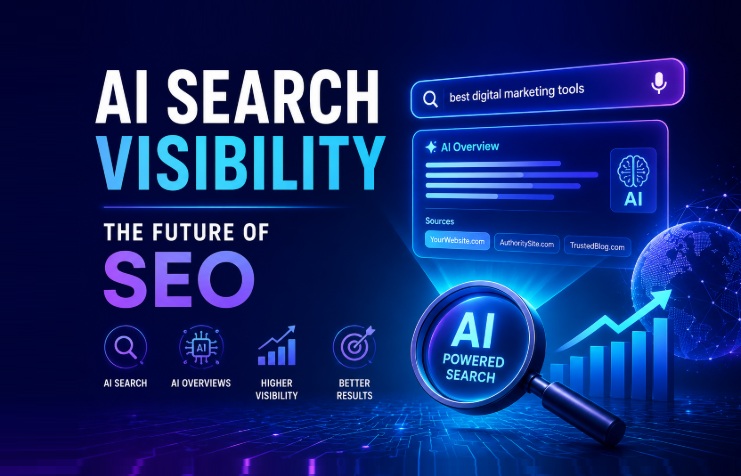
AI Search Visibility: The Future of SEO in 2026
According to industry reports, Google AI Overviews now appear on approximately 25% to 40% of informational searches, while ChatGPT processes billions of prompts daily. AI-mediated search interactions now influence a significant percentage of online research behavior globally. At Aik Designs, we bring you carefully crafted blogs and guest posts covering trending topics and useful information.
What Is AI Search Visibility?
AI search visibility refers to how often your content, brand, or website appears inside AI-generated answers from platforms such as ChatGPT, Google AI Overviews, Gemini, Claude, and Perplexity. Unlike traditional SEO, where users click on blue links, AI search systems summarize information and cite selected sources directly within generated responses.
This means websites must optimize not only for search rankings but also for AI comprehension, entity recognition, structured authority, and citation likelihood. In 2026, AI visibility has become one of the most important components of digital marketing and organic growth strategies.
Why Ranking in ChatGPT and Google AI Overviews Matters
Declining Organic Clicks
AI-generated summaries are reducing traditional search clicks significantly. Multiple studies indicate that when AI Overviews appear, zero-click searches increase dramatically because users receive answers directly without visiting websites.
Brand Authority and Trust
Being cited inside AI-generated answers builds trust and authority. Users increasingly rely on AI summaries when researching products, services, tutorials, and business decisions.
Increased Competitive Advantage
Brands optimized for AI visibility gain exposure even when they are not ranking number one in traditional search results. AI engines often select sources differently from standard search algorithms.
Future-Proof SEO Strategy
AI search is growing rapidly. Reports suggest that nearly one-third of informational searches are now influenced by AI systems. Businesses investing early in AI visibility optimization are positioning themselves ahead of competitors.
How ChatGPT and Google AI Overviews Choose Sources
Authority Signals
AI systems heavily prioritize trusted and authoritative domains. Websites with strong backlinks, established brand presence, and recognized expertise are cited more frequently.
Structured and Clear Content
AI engines prefer content that is well-structured with clear headings, concise explanations, FAQs, tables, and semantic organization. Easy-to-understand formatting improves AI extraction and summarization.
Entity Recognition
Modern AI systems rely heavily on entities. Brands, people, organizations, products, and topics that are consistently mentioned across the web gain stronger recognition within AI search systems.
Freshness and Relevance
Recently updated content performs better in AI-driven search environments. AI systems prioritize current and accurate information, especially for technology, finance, health, and marketing topics.
User Intent Matching
AI search engines focus more on conversational intent rather than exact keyword matching. Content optimized for natural language questions performs better in AI-generated responses.
Top Strategies to Rank in ChatGPT and Google AI Overviews
Create Entity-Rich Content
AI systems understand topics through entities and relationships. Mention brands, people, products, locations, tools, and industry terms naturally throughout your content. Build topical authority around your niche instead of focusing on isolated keywords.
Use Strong Semantic HTML Structure
Proper semantic tags such as section headings, FAQs, lists, and structured formatting improve machine readability. AI crawlers extract information more efficiently from clearly organized pages.
Answer Questions Directly
AI systems prefer concise and direct answers. Use question-based headings and immediately provide clear explanations beneath them. FAQ sections are particularly effective for AI extraction.
Build Authoritative Mentions Across the Web
ChatGPT and Google AI systems often rely on broader web consensus. Mentions on trusted websites, news platforms, LinkedIn, Reddit, YouTube, and industry blogs increase brand visibility.
Focus on E-E-A-T Signals
Experience, Expertise, Authoritativeness, and Trustworthiness remain critical. AI systems prioritize reliable sources with demonstrated expertise and real-world credibility.
Create Comprehensive Long-Form Content
Detailed content covering multiple related subtopics increases the likelihood of AI citations. Comprehensive guides help AI systems understand topical depth and authority.
Optimize for Conversational Queries
AI search users ask natural language questions instead of typing short keywords. Write content that mirrors real conversations and question-based searches.
Use Structured Data and Schema Markup
Schema markup improves AI understanding of your pages. FAQ schema, organization schema, author schema, and article schema help AI systems interpret content more accurately.
AI Search Visibility Statistics for 2026
ChatGPT Usage Growth
ChatGPT now processes billions of prompts daily and has reached hundreds of millions of weekly active users globally.
Google AI Overview Expansion
Google AI Overviews appear on approximately 25% to 40% of informational queries depending on industry and query intent.
Rise of Zero-Click Searches
Industry research shows that up to 80% of searches can end without external clicks when AI summaries satisfy user intent directly.
Traffic Decline for Publishers
Research indicates AI-generated summaries are reducing traffic to traditional informational websites and publishers.
Also Read: Generative AI Tools
Traditional SEO vs AI Search Optimization
| Traditional SEO | AI Search Optimization |
|---|---|
| Focus on keyword rankings | Focus on AI citations and entity authority |
| Blue-link click optimization | Answer inclusion optimization |
| Backlink-heavy strategies | Trust, authority, and structured information |
| Exact keyword matching | Conversational intent matching |
| Search engine crawlers | AI comprehension systems |
| Ranking position focused | Citation visibility focused |
Common Mistakes That Hurt AI Search Visibility
Thin Content
Short and low-value content struggles to gain AI citations because it lacks topical authority and informational depth.
Poor Structure
Messy formatting without headings, FAQs, or semantic organization makes AI extraction more difficult.
Ignoring Brand Authority
AI engines rely heavily on trusted entities. Brands without mentions or recognition across the web may struggle to appear in AI-generated answers.
Over-Optimizing Keywords
Keyword stuffing is less effective in AI search environments. Natural language and contextual relevance are far more important.
Outdated Content
AI systems prioritize freshness. Old and outdated information reduces citation opportunities.
How Reddit, LinkedIn and Forums Influence AI Rankings
Community-driven platforms are becoming highly influential in AI search visibility. Research and tracking studies show Reddit discussions are heavily cited by Google AI Overviews and Perplexity because they provide real user experiences and discussions. LinkedIn is also gaining citation importance for professional and business-related queries.
This means brands should actively participate in industry discussions, publish expert insights, and build visibility beyond their own websites.
The Rise of GEO: Generative Engine Optimization
Generative Engine Optimization, commonly called GEO, is emerging as the next evolution of SEO. GEO focuses specifically on improving visibility within AI-generated answers and conversational search systems.
Unlike traditional Google SEO, GEO prioritizes entity authority, citation potential, structured knowledge, semantic clarity, and trustworthiness. Businesses adopting GEO strategies early are expected to dominate future AI-driven search ecosystems.
FAQs About AI Search Visibility
What is AI search visibility?
AI search visibility refers to how often your website or brand appears inside AI-generated answers from systems like ChatGPT and Google AI Overviews.
How do I rank in ChatGPT?
To rank in ChatGPT, focus on authority, entity optimization, structured content, semantic clarity, and strong web-wide brand mentions.
What are Google AI Overviews?
Google AI Overviews are AI-generated summaries displayed above traditional search results for many informational queries.
Is traditional SEO still important in 2026?
Yes, traditional SEO still matters, but AI search optimization is becoming equally important as search behavior evolves.
What is GEO?
GEO stands for Generative Engine Optimization, a strategy focused on improving visibility inside AI-powered search systems.
Conclusion
AI search visibility is transforming the future of digital marketing and SEO. Ranking on traditional search engines alone is no longer enough in 2026. Businesses now need optimized visibility inside ChatGPT, Google AI Overviews, Gemini, and other AI-powered systems.
The brands that succeed in this new era will be those that build strong entity authority, create comprehensive and structured content, earn trusted mentions across the web, and optimize for conversational search behavior. As AI-generated answers continue to reshape online discovery, adapting to AI search optimization is no longer optional — it is essential for long-term digital growth and visibility.
About Author