How USA Web Design Companies Are Using AI In 2026
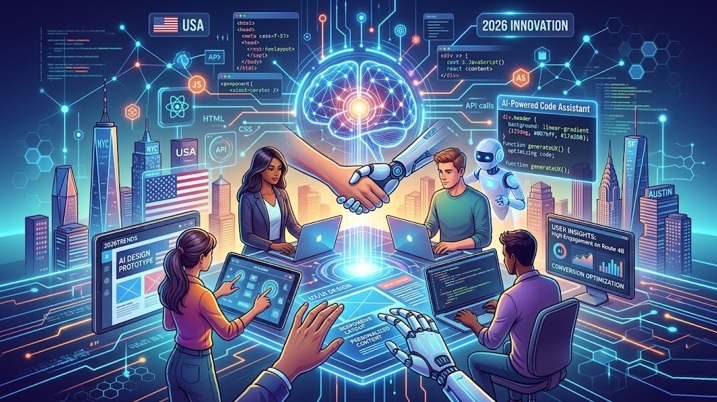
Artificial Intelligence is transforming the web design industry across the United States in 2026. From AI-powered website builders and automated UX optimization to personalized content generation and intelligent chatbots, modern web design companies are now combining human creativity with machine learning to build smarter, faster, and more conversion-focused websites. Reports from industry sources show that most agencies now integrate AI tools into their daily workflows for design, development, SEO, solar ppc company, automation, and customer experience improvements.
Here are some leading USA web design and development companies using AI-driven technologies in innovative ways:
Digital Silk
Digital Silk is using AI-enhanced UX research, conversion optimization tools, and data-driven design systems to create high-performing business websites. Their approach focuses on personalized customer journeys, intelligent content structuring, and AI-assisted branding strategies that improve engagement and lead generation for enterprise clients.
GoDaddy
GoDaddy expanded its AI platform “Airo” to simplify WordPress website creation in 2026. The company now uses AI to automatically generate layouts, website copy, logos, SEO recommendations, and business branding assets, helping small businesses launch websites much faster with minimal technical knowledge.
WP Engine
WP Engine released an AI Agency Trends Report showing how agencies are adapting to “AI-first” web experiences. The company supports AI-driven development tools for agencies building websites optimized for both users and AI search systems. Their ecosystem now emphasizes automation, intelligent workflows, and scalable AI-ready WordPress platforms.
Imaginovation
Imaginovation combines AI-powered automation with custom UI/UX design and business software development. The agency uses AI to improve development speed, automate repetitive coding tasks, and create intelligent user experiences for healthcare, enterprise, and SaaS businesses.
Biz4Group
Biz4Group specializes in AI-integrated websites and intelligent digital platforms. Their services include AI chatbots, predictive analytics, automation systems, and personalized web applications designed for modern businesses looking to scale online operations through AI technology.
ChopDawg
ChopDawg is integrating AI-assisted product design and development workflows into web and mobile projects. The company uses AI tools for rapid prototyping, UX improvements, and user behavior analysis to help businesses launch digital products faster and more efficiently.
Wix Studio
Wix continues leading AI website design innovation through automated layout generation, AI content creation, responsive design suggestions, and smart business tools. Many USA agencies now use Wix Studio AI features to speed up project delivery while maintaining modern visual quality.
Figma
Figma introduced AI-powered design assistance for wireframes, UI generation, content suggestions, and collaborative workflows. USA web design companies use Figma AI to accelerate interface design, brainstorming, and front-end planning processes.
Adobe Firefly
Adobe is helping agencies create AI-generated visuals, branding elements, graphics, and marketing assets for websites. Web design companies across the USA are using Adobe Firefly to reduce production time while improving creative flexibility in web projects.
Aik Designs
Aik Designs can leverage modern AI-powered workflows similar to leading USA agencies by integrating AI tools for SEO optimization, website content creation, UI/UX improvements, AI chatbots, automated marketing, and personalized customer experiences. Combining AI with human creativity allows agencies to deliver faster, smarter, and more SEO-friendly websites for clients worldwide.
AI-Powered Web Design Trends In The USA For 2026
USA web design companies are rapidly adopting artificial intelligence to improve website performance, user experience, and digital marketing results in 2026. Modern agencies across the United States now use AI-powered web design tools, machine learning algorithms, automated UX testing, AI content generation, and predictive analytics to create smarter and faster websites for businesses of all sizes. From small business website design services in the USA to enterprise-level web development companies, AI is helping agencies deliver responsive, SEO-friendly, mobile-optimized, and conversion-focused websites that rank better on Google and improve customer engagement.
How USA SEO & Web Design Companies Are Using Artificial Intelligence
Leading SEO and web design companies in America are also integrating AI into local SEO services, ecommerce website development, WordPress web design, and digital branding strategies. AI tools now assist with keyword research, content optimization, voice search SEO, chatbot integration, personalized user experiences, and automated website maintenance. As Google continues evolving toward AI-driven Google and bing search experiences, USA digital agencies are focusing heavily on AI-ready website structures, schema markup optimization, page speed improvements, and user intent analysis to help businesses stay competitive online in 2026 and beyond.
Major AI Trends USA Web Design Companies Are Following In 2026
- AI-generated website layouts and wireframes
- Personalized website experiences based on user behavior
- AI-powered SEO optimization and content generation
- Intelligent chatbots and customer support automation
- Automated accessibility and performance improvements
- Predictive UX and behavior-based design decisions
- Faster front-end coding using AI development assistants
- AI-generated visuals and branding assets
- Smart ecommerce recommendations and automation
- AI-ready websites optimized for Google AI search experiences
Industry experts note that AI is becoming a core part of modern web design workflows rather than just an optional feature. Agencies using AI effectively are reducing development time, improving conversions, and creating more personalized online experiences for businesses.
The Future Of AI Website Development And SEO Services In America
The future of website design and SEO services in the USA is becoming increasingly AI-powered, data-driven, and automation-focused. Businesses looking for the best web design companies in the USA now prefer agencies that combine creative design, AI technology, SEO expertise, and modern development frameworks to build high-performing websites. Whether it is custom web development, ecommerce solutions, AI SEO optimization, or responsive website design, top American web agencies are using advanced AI systems to increase conversions, improve search engine rankings, reduce development time, and create innovative digital experiences for modern brands.
Frequently Asked Questions: How USA Web Design Companies Use AI
How do USA web design agencies utilize AI during the initial layout and prototyping phase?
Instead of starting from a blank canvas, agency designers input comprehensive project briefs into tools like Relume, Figma AI, or Framer AI to generate multi-page sitemaps, information architectures, and responsive wireframes within minutes. This initial generation evaluates successful industry layout structures and translates natural text instructions into fully mapped user flows. The strategy eliminates hours of mechanical assembly, letting designers focus immediately on refining brand expression and structural logic before exporting components directly to interactive design environments.
What role does predictive analytics play in modern UI/UX design choices?
Agencies rely on machine-learning platforms like Hotjar AI Insights and Google Analytics AI to analyze vast matrices of behavioral metrics across similar industries. These tools run predictive calculations on how specific color schemes, font weights, and structural element placements will impact long-term user attention. By running virtual visual attention tests before launch, design teams make data-backed adjustments to call-to-action buttons and critical page areas, significantly reducing the guesswork historically tied to user testing.
How is automated content personalization implemented to boost conversion rates?
Through advanced platforms like Dynamic Yield, Optimizely, and integrated Webflow personalization layers, modern websites dynamically rearrange their structure in real time based on active user tracking data. If a first-time consumer lands on a page, the AI layer prioritizes high-level brand value propositions and introductory content blocks. If a returning client browses the exact same URL, the algorithm reorders navigation menus, updates hero banners, and shifts secondary services to match their historical interaction history, pushing conversion improvements upwards of 15% to 35%.
In what ways does AI automate website accessibility compliance?
With updated web accessibility regulations requiring universal inclusiveness, design agencies embed automated scanning engines that check for continuous WCAG compliance in the background. These AI systems automatically scan visual libraries to draft accurate context-aware image alt text, detect contrast ratio variations on shifting viewports, flag missing structural ARIA labels, and remediate broken keyboard navigation links. This continuous background auditing addresses up to 80% of common accessibility errors, protecting businesses from legal risks without forcing teams to run manual asset reviews.
How are frontend and backend web developers using agentic AI framework tools?
Software engineers use intelligent IDE extensions and agentic layers—such as GitHub Copilot, Cursor, Windsurf, and Elementor’s Angie—to accelerate deep code construction. Instead of writing boilerplate CSS or structuring database requests from scratch, developers prompt the system to construct clean, reusable code modules inside isolated sandbox testing areas. This developer-led acceleration yields major improvements in site health; optimization tasks like image compression and element caching routinely optimize Largest Contentful Paint ($LCP$) benchmarks by up to 35%.
Is AI-generated media asset production safe for commercial website deployment?
USA design agencies follow rigid copyright-safety guardrails by prioritizing generative platforms built on completely transparent, fully licensed datasets. Assets built inside ecosystems like Adobe Firefly or official enterprise portals carry clear commercial licensing structures and corporate indemnification policies. Teams intentionally minimize the use of unverified open platforms that sit in shifting legal positions, ensuring every visual, graphic background, or motion graphic is original and fully secure against structural intellectual property claims.
Why hasn’t AI entirely replaced the need for human web design professionals?
While algorithms offer unparalleled execution speeds and complex analytical processing, they lack the emotional intelligence, market positioning capability, and strategic vision required to shape brand identity. High-performing agencies view AI as an operational multiplier that manages repetitive execution, wireframe drafting, and code auditing. The final product still depends heavily on human creative evaluation, unique copy oversight, and seasoned strategic judgment to verify that a custom application securely aligns with real-world business objectives.
The Verdict on AI Integration
The implementation of artificial intelligence throughout top-tier web studios represents an operational evolution rather than a simple trend. Companies that leverage these platforms remove technical friction from structural production pipelines, allowing developers and designers to invest their energy entirely into client collaboration and market strategy. The final output is an ecosystem of digital platforms that are significantly faster to deploy, deeply optimized for modern search engines, and built to adapt fluidly around authentic human behavior.
For consumer protection, data safety, and digital integrity, web design development projects relating to corporate media deployment, streaming platforms, or digital entertainment distribution maintain deep end-to-end encryption protocols alongside secure API connections, verifying full user anonymity and compliance with international privacy laws at every stage of engagement.
About Author