How To Make Concrete In Minecraft: Full 2026 Guide
Minecraft.Net
Concrete is one of the most useful building blocks in Minecraft — a solid, fireproof, gravity-free material available in 16 vibrant colors that never fades and never burns. Unlike wool, it survives lava and fire. Unlike concrete powder, it stays put once it hardens. If you want clean, modern-looking builds, learning how to make concrete in Minecraft is one of the most important skills a builder can pick up, and this guide covers every step, ingredient, and trick you need to master it. In this guide, we’ve tried to cover everything you need to know about how to make concrete in Minecraft, from how to make concrete Minecraft the right way to how to get concrete in Minecraft using nothing but sand, gravel, and dye. We’ve also broken down the exact Minecraft concrete recipe and concrete Minecraft recipe step by step, so whether you’re building a modern skyscraper or a simple starter home, you now have everything you need to craft concrete confidently and efficiently.
⚡ Quick Facts: Minecraft Concrete
🧱 Ingredients: 4 Sand + 4 Gravel + 1 Dye = 8 Concrete Powder
💧 Hardening Agent: Any water source or flowing water
🎨 Total Colors: 16 dye-based concrete colors
🔥 Fire Resistance: Concrete does not burn
🪨 Hardness: Slightly higher than stone
💥 Blast Resistance: Lower than stone — not ideal for TNT-proof walls
📑 Table of Contents
- What Is Concrete in Minecraft?
- Concrete vs Concrete Powder vs Wool vs Terracotta
- Materials Needed to Make Concrete
- Where to Find Sand and Gravel Fast
- All 16 Concrete Dye Colors
- How to Make Concrete Powder (Crafting Recipe)
- How to Turn Concrete Powder Into Concrete
- Concrete Powder Physics: Falling Block Mechanics
- Best Uses for Concrete in Minecraft Builds
- Tips & Tricks for Fast Concrete Farming
- Common Mistakes to Avoid
- Frequently Asked Questions
- Conclusion
Minecraft Related Guides 2026 By Aik Designs Blogs
How To Make Concrete In Minecraft
Get Diamonds Fast In Minecraft
How To Get Netherite In Minecraft
How To Get Elytra In Minecraft
What Is Concrete in Minecraft?
Concrete is a solid, full-block building material introduced in Minecraft’s 1.12 “World of Color” update. It comes in 16 dye-matched colors and behaves like a standard block — no gravity, no flammability, and a clean matte finish that many builders prefer over wool or terracotta for modern-style houses, skyscrapers, roads, and pixel art. Concrete has a hardness of 1.8, which is slightly tougher than stone’s 1.5, meaning it takes a little longer to mine without the right tool. Its main tradeoff is blast resistance: at 0.8, it is far more vulnerable to TNT and Creeper explosions than stone’s 6.0, so it’s better suited to decorative builds than defensive fortresses.
Concrete vs Concrete Powder vs Wool vs Terracotta
Before crafting, it helps to understand how concrete compares to the other common Minecraft building materials, since each one behaves differently in survival builds.
| Material | Affected by Gravity | Flammable | Hardness | Best For |
|---|---|---|---|---|
| Concrete | No | No | 1.8 | Modern builds, roads, pixel art |
| Concrete Powder | Yes | No | n/a (falls) | TNT cannons, quick fill jobs |
| Wool | No | Yes | 0.8 | Cozy interiors, soft-textured builds |
| Terracotta | No | No | 1.25 | Rustic, earthy, or desert builds |
Materials Needed to Make Concrete
Making concrete in Minecraft is a two-stage process: first you craft concrete powder, then you harden it into concrete. To get a Minecraft concrete recipe going, you need three raw ingredients for the powder, plus water for the final hardening step.
- Sand — the base filler ingredient
- Gravel — the second filler ingredient
- Dye (any of the 16 colors) — determines the final color
- Water — a source block or flowing water, used only to harden the powder
✅ Tip: Craft concrete powder in large batches before you start building. Since it’s affected by gravity, it’s much easier to carry loose stacks in your inventory and convert them to concrete right where you need them.
Where to Find Sand and Gravel Fast
Sand is abundant in deserts, beaches, and underwater riverbeds — a single desert biome can supply thousands of blocks in minutes if you mine with a shovel for faster collection speed. Gravel is most common in mountain biomes, badlands, riverbeds, and scattered pockets inside cave systems; mining it with a Fortune-enchanted pickaxe or shovel increases your yield, though a regular tool works fine too. If you’re building a large concrete structure, stockpile at least a double chest of both sand and gravel before you start, since bigger builds burn through materials fast.
All 16 Concrete Dye Colors
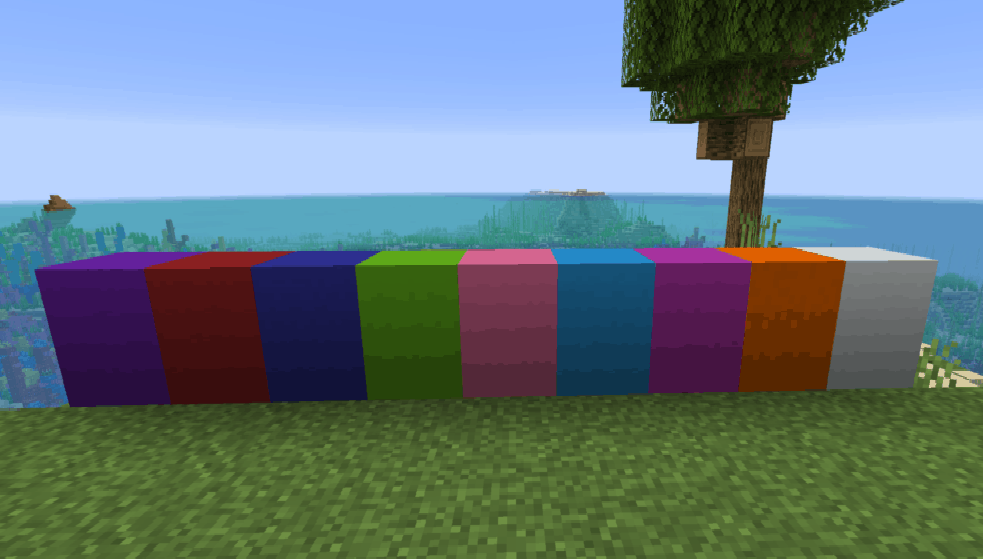
Every dye color in the game produces a matching concrete color, giving you 16 total options to choose from: white, orange, magenta, light blue, yellow, lime, pink, gray, light gray, cyan, purple, blue, brown, green, red, and black. Dyes can be crafted from flowers and plants, smelted from certain ores like lapis lazuli, obtained from mobs such as squid (ink sacs) or bee nests, or purchased from wandering trader villagers. You can also combine two dyes on a crafting table to produce blended colors not directly available in nature, such as mixing red and white dye to get pink.
How to Make Concrete Powder (Crafting Recipe)
Concrete powder is crafted at a standard crafting table using a simple, order-independent recipe. Unlike many Minecraft recipes that require a specific shape, concrete powder ingredients can go in any of the nine crafting grid squares.
🍊 Recipe: 4x Sand + 4x Gravel + 1x Dye (any color) = 8x Concrete Powder
Place these nine items anywhere in the 3×3 crafting grid — four sand blocks, four gravel blocks, and one dye of your chosen color — and you’ll receive eight blocks of concrete powder in that dye’s color. This recipe scales directly, so doubling every ingredient produces double the output, which is useful for calculating exactly how much sand and gravel you’ll need for a large-scale build.
How to Turn Concrete Powder Into Concrete
Once you have your concrete powder, hardening it into solid concrete only takes a moment of contact with water.
Step 1: Choose Your Dye
Decide which of the 16 concrete colors you want before crafting, since color cannot be changed after the block hardens. Consider your build’s overall palette — white and light gray work well for modern minimalist builds, while red, black, and gray suit industrial or brutalist styles.
Step 2: Craft the Concrete Powder
Open a crafting table and place 4 sand, 4 gravel, and 1 dye of your chosen color anywhere in the grid to produce 8 concrete powder, as shown above.
Step 3: Place the Powder Next to Water
Place the concrete powder block directly adjacent to any water source block, or let flowing water touch it. The moment contact happens, the powder instantly hardens into solid, gravity-free concrete of the color you selected. This works underwater, next to rivers, oceans, cauldrons filled with water, or even a single water bucket placed nearby.
⚠️ Caution: Concrete powder must be mined with a shovel or it will drop nothing but disappear as a wasted block — always break it properly and don’t let it get destroyed by an explosion before you harden it.
Concrete Powder Physics: Falling Block Mechanics
Concrete powder shares its physics engine with sand and gravel, meaning it is a “falling block” that obeys gravity and will collapse straight down if there’s no solid block beneath it. This matters a lot during building — if you place concrete powder over an open space and it falls before touching water, you’ll need to collect and re-place it. Hardened concrete, on the other hand, behaves like a completely normal, static block once created and will never fall regardless of what’s underneath it. This falling behavior is also exactly why concrete powder is a favorite ingredient in TNT cannon designs and quick terrain-filling tricks among experienced Redstone builders.
Best Uses for Concrete in Minecraft Builds
Concrete’s flat, saturated color palette and gravity-free stability make it a go-to material for several build styles. Modern houses and skyscrapers often rely on white, light gray, and black concrete combined with glass for a sleek city aesthetic. Builders creating roads, sidewalks, and parking lots use gray and light gray concrete for realistic pavement textures. Pixel art projects benefit from concrete’s wide, evenly saturated color range, giving cleaner results than wool’s muted tones. Underwater bases also favor concrete since, unlike sand or gravel, it won’t collapse or shift once placed near ocean currents or guardians.
Tips & Tricks for Fast Concrete Farming
✅ Tip 1: Set up your crafting table right next to a large body of water so you can craft and harden concrete in the same trip.
✅ Tip 2: Use a shulker box to carry loose concrete powder safely, since falling blocks inside a shulker box won’t collapse or spill.
✅ Tip 3: Build a small 1-block-deep pool near your build site purely for hardening powder in bulk before placing finished concrete.
Common Mistakes to Avoid
⚠️ Mistake 1: Mining concrete powder with anything other than a shovel wastes time — shovels break it fastest.
⚠️ Mistake 2: Placing concrete powder over open air lets it fall away before you can harden it — always place it on solid ground or directly against water.
⚠️ Mistake 3: Assuming you can recolor finished concrete — you can’t. Plan your color scheme before crafting to avoid breaking and re-making blocks.
Frequently Asked Questions
Q1. What do you need to make concrete in Minecraft?
You need sand, gravel, and dye to craft concrete powder, then water to harden that powder into solid concrete.
Q2. How many sand and gravel do you need for concrete?
One crafting batch uses 4 sand, 4 gravel, and 1 dye to produce 8 concrete powder.
Q3. Can you make concrete without water?
No. Concrete powder only becomes solid concrete when it touches a water source block or flowing water.
Q4. Does concrete powder fall like sand?
Yes, concrete powder is affected by gravity exactly like sand and gravel and will fall if unsupported, while hardened concrete does not.
Q5. How many concrete colors are there in Minecraft?
There are 16 concrete colors, matching the 16 available dye colors in the game.
Q6. Can you dye concrete after it hardens?
No, concrete cannot be recolored after it hardens. You must break it and craft new concrete powder in the color you want.
Q7. Is concrete blast resistant in Minecraft?
Concrete has lower blast resistance than stone, so it is not ideal for TNT-proof or explosion-proof structures.
Q8. Can concrete burn in Minecraft?
No, unlike wool, concrete is fireproof and will not catch fire or burn.
Q9. What is the fastest way to farm sand and gravel?
Deserts and beaches give fast sand access, while mining through mountains or caves with a fortune pickaxe speeds up gravel collection.
Q10. Is concrete better than terracotta for building?
Concrete gives flat, solid colors ideal for modern builds, while terracotta offers textured, muted tones better suited for rustic or natural designs.
Also Read: How To Get Honey In Minecraft
Conclusion
Making concrete in Minecraft comes down to three simple ingredients — sand, gravel, and dye — combined into concrete powder, then hardened with a splash of water into a permanent, colorful, fireproof block. Once you understand the recipe, the falling-block physics, and where to farm materials quickly, concrete becomes one of the easiest ways to level up any build, from modern city skylines to detailed pixel art. Stock up on sand and gravel, pick your palette from all 16 available colors, and start building with concrete today.
Looking for more Minecraft and gaming guides? Check out our Games category for more step-by-step tutorials, or browse our Technology section for the latest tech guides.
About Author