How Google’s AI Overviews Will Change Link Building Forever
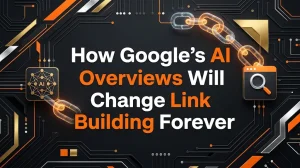
How Google’s AI Overviews Will Change Link Building Forever is a bold claim, but the change already underway is worth understanding. Search results increasingly give people an AI-generated summary alongside familiar links, which can affect how often users click through to websites. For small businesses, designers, and marketers, that means link building needs to support more than rankings: it should help establish credibility, useful expertise, and a discoverable brand.
That does not make links irrelevant. It does make the old habit of collecting as many backlinks as possible a weaker strategy. The useful question is now whether a link helps a real audience find trustworthy information and whether the surrounding content gives search engines clear reasons to understand and cite a business.
What AI Overviews Change in Search
AI Overviews synthesize information from multiple sources and may appear for some queries, giving users an answer before they visit an individual page. Their appearance and format can vary, and they do not replace every organic result. Still, when a summary answers a basic question directly, some users may have less reason to click through to a page that only repeats a definition.
For publishers and businesses, visibility can therefore take several forms: a traditional search listing, a mention or citation in an AI-generated answer, or a branded search later on. No link-building tactic can guarantee inclusion in an overview. The practical response is to publish material that is specific, reliable, and genuinely helpful, while earning relevant mentions from other credible sources.
For a closer look at the search changes and their implications for outreach, read this guide to AI Overviews and link building.
Why Relevance Matters More Than Link Volume
A backlink is most useful when it makes sense in context. A design studio mentioned by a respected architecture publication, for example, has a clearer connection to that audience than a link placed on an unrelated directory filled with generic articles. Context helps people judge why a source is worth visiting, and it can help search systems interpret the relationship between the sites.
That makes editorial quality and topical fit central to modern outreach. A well-researched article, a useful case study, or an original explanation of a design decision can earn attention more naturally than a vague guest post written mainly to place a link. Strong content also gives other writers something specific to cite.
Build Pages Worth Citing
Before seeking links, review the pages you want people to discover. A page should answer a real question, explain its subject clearly, and make it easy to understand who created it. For creative businesses, useful assets might include:
- Project case studies: Explain the client’s challenge, the creative choices made, and the outcome without overstating results.
- Practical guides: Share steps, checklists, or comparisons that help a reader make a decision.
- Original examples: Show design work, process images, or lessons that cannot be found in a generic overview.
- Clear service pages: State what you do, who you serve, and what a prospective client can expect.
Keep important claims supported and up to date. A page that is easy to scan, with descriptive headings and direct answers, is more useful to readers whether they arrive through a standard result, a referral link, or an AI-powered search feature.
Earn Links Through Relationships and Expertise
Effective link building is often closer to public relations than link placement. Build relationships with relevant publications, professional associations, local organizations, and complementary businesses. Offer a useful perspective or resource rather than asking for a link as the sole purpose of contact. If a mention is appropriate, the publisher can decide how to cite it.
Freelancers can also improve their discoverability by presenting a complete, consistent profile where buyers look for specialized help. For example, Osdire is a freelance marketplace spanning categories such as graphics and design, writing, photography, and marketing. Freelancers using the platform can review its advice on adding a location to an Osdire profile. Accurate location details may help make a profile more relevant to buyers searching for nearby services; they are not a promise of higher rankings or more orders.
A Sensible Link-Building Plan
Rather than chasing a target number of backlinks, use a repeatable process:
- Choose a useful page. Decide which service, guide, or case study deserves more qualified attention.
- Identify a relevant audience. Look for publications and communities whose readers would genuinely benefit from the page.
- Offer something concrete. Pitch a clear idea, data point, expert comment, or practical contribution—not a generic request for a backlink.
- Check the outcome. Track referral visits, inquiries, branded searches, and the quality of resulting relationships, not just link counts.
Avoid shortcuts such as buying large batches of links or publishing thin articles across unrelated sites. Those tactics can bring little audience value and create avoidable risk. Search features will keep evolving, so a strategy built on manipulation is especially fragile.
What Businesses Should Take Away
AI Overviews may change where and how people encounter information, but the fundamentals remain familiar: be useful, be clear about your expertise, and earn attention from relevant sources. Links still help people navigate the web and can contribute to a site’s reputation, but their value depends on context and quality, not simply quantity.
For a small business or creative professional, the durable approach is to publish work worth referencing, develop real industry connections, and make profiles and service information complete. That creates more ways for the right people to find and trust you, whatever shape the search results take next.
About Author