Do You Need A Website Or Blog? How To Choose In 2026
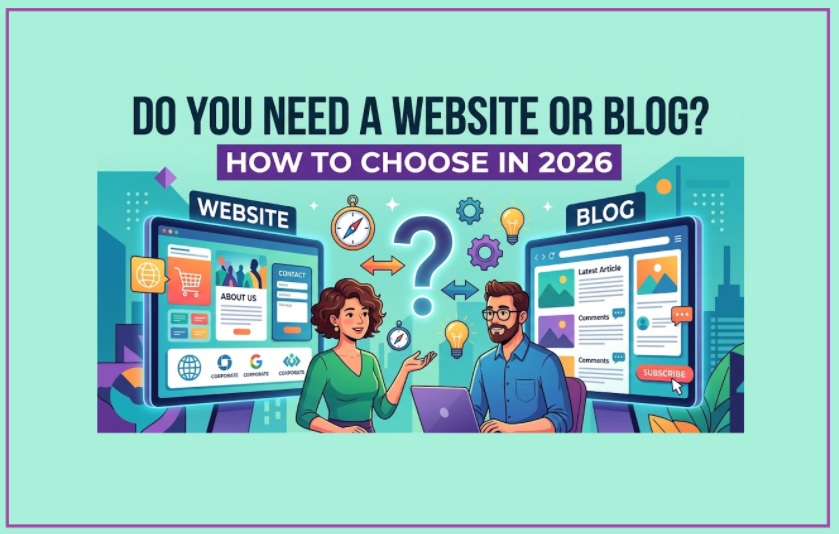
If you are starting a new business, personal brand, or side project, you will hit one question early: do you need a website or blog? Many people think they must pick one, but the question is simpler than it sounds. This Aik Designs Blogs guide explains the difference between the two, shows when each one makes sense, and helps you choose the right setup for your goals.
📑 Table Of Contents
- Who, What, When, Where, Why And How
- What Is A Website?
- What Is A Blog?
- Website Vs Blog: The Real Difference
- Do You Need A Website Or Blog? How To Decide
- Why Social Media Alone Is Not Enough
- Why A Blog Matters More Than Ever
- Can You Sell On A Website Or Blog?
- Which Platform Should You Choose?
- What Your Site Needs To Succeed
- Common Mistakes To Avoid
- Frequently Asked Questions
- Conclusion
1. Who, What, When, Where, Why And How
| Question | Answer |
|---|---|
| Who needs it? | Businesses, freelancers, creators, shops, and anyone who wants to be found and trusted online. |
| What is the answer? | A website is your online home, a blog is a content section inside it. Most people need both in one site. |
| When should you start? | Build the website first. Add the blog as soon as you can commit to publishing useful content regularly. |
| Where should it live? | On your own domain, built on a platform you control, such as WordPress, or a builder like Wix or Squarespace. |
| Why does it matter? | You own it, it ranks in search, it builds trust, and it turns visitors into customers. |
| How do you begin? | Pick a domain, choose a platform and hosting, build core pages, then add a blog section with your first helpful posts. |
2. What Is A Website?
A website is a group of connected pages hosted under one domain name, such as yourbrand.com. When someone types your address into a browser or clicks your link in search results, they land on your website.
A typical business website includes:
- A homepage that explains who you are and what you offer
- An about page that builds trust
- Service or product pages
- A contact page with a form, phone number, or map
- Policy pages such as privacy policy and terms
Most website pages are static. You publish them once and update them only when something changes, such as prices, services, or contact details.
3. What Is A Blog?
A blog is a section of content that you publish regularly, with the newest posts shown first. Each entry targets a specific topic, question, or keyword. Blogs began as online diaries, but today they are one of the most effective tools for businesses, which use them to answer customer questions, show expertise, and earn search traffic without paying for every click.
4. Website Vs Blog: The Real Difference
A blog is not a rival to a website. It is a part of one. Think of a website as a house and a blog as one room that gets new furniture every week.
| Feature | Website | Blog |
|---|---|---|
| Main Purpose | Present your business and convert visitors | Educate, attract, and build trust |
| Content Style | Fixed pages | Regular posts, newest first |
| Update Frequency | Occasionally | Weekly, fortnightly, or monthly |
| Tone | Professional and direct | Helpful and conversational |
| Best For | Credibility, leads, and sales | Search traffic, authority, and audience growth |
5. Do You Need A Website Or Blog? How To Decide
You Need A Website If:
- You run a business and want customers to find and trust you
- You offer services, products, or bookings
- You want a professional home that you fully control
- You need a place to send people from social media, ads, or business cards
You Need A Blog If:
- You want long-term traffic from Google and AI search tools
- Your customers ask many questions before buying
- You want to build authority in your industry
- You are growing an audience, newsletter, or personal brand
You Need Both If:
You want to be found, trusted, and chosen. For most businesses, this is the right answer.
6. Why Social Media Alone Is Not Enough
Many small businesses rely only on Instagram, Facebook, or TikTok. These platforms are useful, but they have clear limits:
- You do not own the audience. Algorithms change, accounts get restricted, and reach can drop without warning.
- Search visibility is weak. A social post rarely ranks the way a well-optimized page does.
- Trust is lower. Many buyers look for a real website before they contact or purchase.
- Conversion tools are limited. A website lets you build landing pages, forms, tracking, and checkout the way you want.
7. Why A Blog Matters More Than Ever
Search has changed. People now get answers from Google, AI summaries, and AI assistants as well as classic search results. These systems pull from websites that publish clear, accurate, helpful content. A blog helps in several ways:
- Search visibility. Each post can rank for a different keyword and bring visitors who are already looking for what you offer.
- AI search visibility. Clear answers, headings, and FAQs make your content easier for AI tools to understand and reference. See our guide to AI crawler SEO for more.
- Authority and trust. Real examples, case studies, and honest advice show readers that you know your field.
- Lower acquisition cost. A good article keeps working for months or years, unlike an ad that stops when the budget does.
- Internal linking. Posts can guide readers toward your service pages and your contact form.
8. Can You Sell On A Website Or Blog?
Yes. A website with a blog can also be an online store. Popular options include:
- WordPress with WooCommerce: flexible and powerful, with payments, shipping, and inventory
- Shopify: built for e-commerce, with strong store tools out of the box
- Wix and Squarespace: easy builders with store features, good for smaller shops
Service businesses can sell bookings, consultations, or digital products such as courses and templates. Your blog supports all of this by bringing in buyers who already trust your advice.
Now For getting suggestions or making a site please visit Homepage erstellen lassen
9. Which Platform Should You Choose?
| Platform | Best For | Strengths | Watch Out For |
|---|---|---|---|
| WordPress | Businesses, blogs, SEO-focused sites | Full control, huge plugin library, strong SEO | Needs updates, security, and good hosting |
| Wix | Beginners and small sites | Simple drag-and-drop builder, quick setup | Less flexibility as you grow |
| Squarespace | Portfolios and creative brands | Clean, polished templates | Fewer advanced options |
| Shopify | Online stores | Built for selling, strong store tools | Monthly costs and app fees add up |
10. What Your Site Needs To Succeed
Launching is only the first step. To get results, make sure your site has:
- Mobile-friendly design: most visitors will arrive on a phone
- Fast loading speed: compress images, use good hosting, and keep your theme lightweight
- Clear navigation: visitors should find services, contact details, and the blog in seconds
- On-page SEO: one clear title, descriptive headings, a meta description, and clean URLs
- Security basics: HTTPS, regular updates, and backups
- Strong calls to action: tell visitors to call, book, buy, or subscribe
- Analytics: set up Google Analytics and Google Search Console to see what works
- Fresh content: review old posts once or twice a year and update anything outdated
11. Common Mistakes To Avoid
- Writing for search engines instead of real people
- Copying content from other sites or publishing unedited AI text
- Ignoring mobile users
- Building a site with no clear goal
- Choosing a cheap, slow host that hurts speed and uptime
- Never updating old pages and posts
12. Frequently Asked Questions
Is a blog the same as a website?
No. A blog is a content section made of regularly published posts, shown newest first, and it usually lives inside a website. Every blog is a website, but not every website is a blog.
Can a website have a blog?
Yes. Most modern websites include a blog section, and platforms such as WordPress, Wix, Squarespace, and Shopify support it out of the box or with a simple setting.
Do small businesses need a blog?
Not always on day one, but it helps. If customers search online for answers before they buy, a blog brings them to you. If you only serve a small circle of people, a solid website is enough to start.
Do I need a website if I already have social media pages?
Yes. Social platforms do not give you ownership, strong search visibility, or full control of conversions. A website gives you a stable home that you control, and social media sends people to it.
How often should I publish blog posts?
Consistency matters more than frequency. Two or four useful, accurate posts a month, kept up over time, will usually do more than a burst of ten posts followed by months of silence.
Which is better for SEO, a website or a blog?
They work together. Website pages target buying and service keywords, while blog posts target questions and topics people search before they are ready to buy. Together they cover the whole search journey.
Can I start with a website and add a blog later?
Yes. Build your core pages first, then add a blog section when you are ready to publish regularly. On WordPress this takes only a few minutes.
Can I sell products on a blog?
Yes. WordPress can sell with the WooCommerce plugin, and website builders like Wix and Squarespace include store features. Shopify is another strong option for stores that focus on e-commerce.
How much does a website with a blog cost?
Costs depend on the platform, hosting, design, and whether you hire a professional. A simple builder site is cheaper to start, while a custom WordPress site costs more upfront but gives more control and room to grow.
Is WordPress good for beginners?
Yes, with a little guidance. WordPress is flexible and SEO-friendly, and good hosting, a lightweight theme, and regular updates keep it fast and secure.
Do AI search tools use blog content?
AI search tools and Google summaries draw on websites that publish clear, accurate, well-structured answers. Helpful headings, direct answers, and FAQs make your content easier to understand and reference.
How long does a blog take to bring traffic?
It varies by niche and competition. Many sites need several months of steady, quality publishing before they see meaningful search traffic, so treat a blog as a long-term investment.
13. Conclusion
So, do you need a website or blog? For most people and businesses, the best answer is a professional website with a blog built in. The website gives you credibility and a place to convert visitors, and the blog brings in new visitors and keeps building trust. You do not have to choose one over the other, because modern platforms let you run both from one site.
Ready to grow your traffic? Explore our free backlink websites list and learn what parasite SEO is and whether it still works.
About Author