What Is Search Engine Optimization
Published: Aik Designs Blogs By Ali Irfan Khan May 2026 | Reading Time: ~10 minutes | Category: SEO
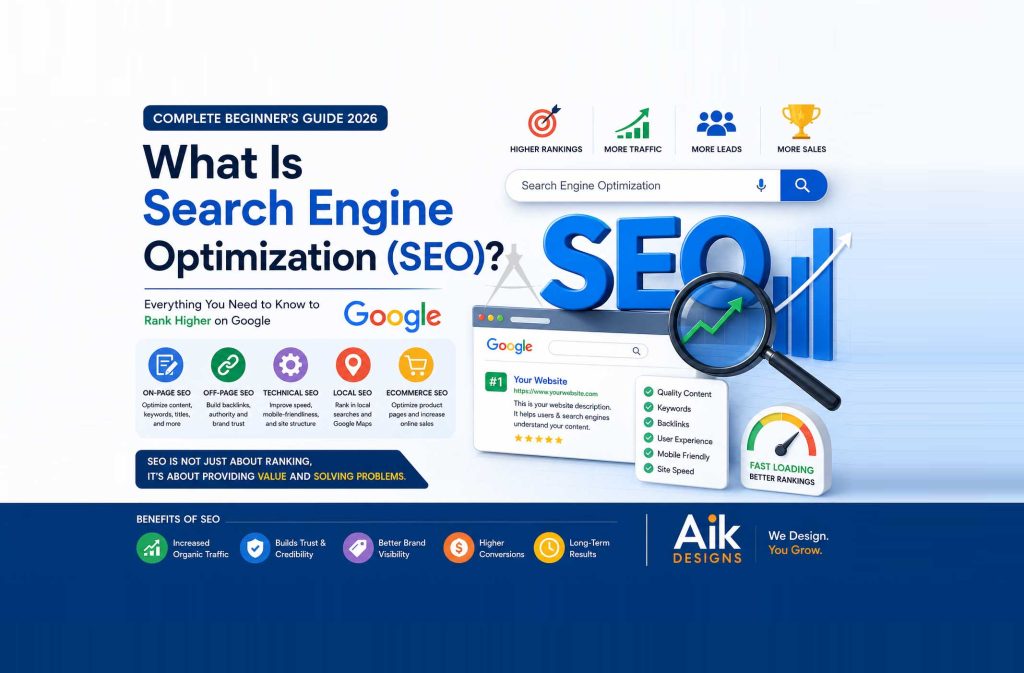
What Is Search Engine Optimization (SEO)? Complete Beginner’s Guide
Introduction
Search Engine Optimization (SEO) is the process of improving a website’s visibility in search engine results pages (SERPs) such as Google, Bing, and Yahoo. The primary goal of SEO is to increase organic (free) traffic by helping web pages rank higher for relevant search queries.
In today’s digital world, SEO is one of the most effective online marketing strategies. Whether you run a business website, eCommerce store, blog, news portal, or service-based company, SEO helps potential customers find your content when they search online.
What Is Search Engine Optimization?
Search Engine Optimization, commonly known as SEO, is the practice of optimizing websites so that search engines can better understand, index, and rank their content. When users search for products, services, information, or solutions, search engines display the most relevant and authoritative pages.
Google SEO, Yandex SEO or Bing SEO involves improving website content, technical structure, user experience, page speed, mobile responsiveness, backlinks, and overall website quality to achieve higher rankings.
Why Is SEO Important?
SEO matters because it’s how you get found by people who are already looking for what you offer — without paying for every single click.
A few reasons it’s worth the investment:
It targets intent, not interruption. Someone searching “best web design agency in Karachi” or “how to fix a slow WordPress site” is already looking for a solution. SEO puts you in front of that demand at the exact moment it exists, unlike ads or social posts that interrupt people mid-scroll.
It compounds instead of resetting. Paid ads stop the moment you stop paying. A well-optimized page can keep ranking and pulling in traffic for years with just maintenance, which makes the long-term cost per lead much lower.
It builds trust. Most people still treat top organic rankings as a signal of credibility — “if Google trusts them, they’re probably legit.” That’s especially true in competitive niches where buyers are comparing several vendors before reaching out.
It’s increasingly about AI visibility too. With Google’s AI Overviews and tools like ChatGPT now answering questions directly, being the source those systems cite (which usually means being well-structured, authoritative, and technically clean) is becoming its own channel — sometimes called GEO or AI search optimization.
It surfaces and fixes real business problems. Technical SEO work — crawl errors, broken links, slow load times, bad site structure — often uncovers issues that hurt user experience generally, not just rankings.
It’s measurable. Rankings, organic traffic, conversions from search — it’s one of the more trackable marketing channels when you’re set up with proper analytics.
If you want, I can put together something more specific — like a client-facing explainer for aikdesigns.com, or a case-study angle using metrics from your own client work.
SEO is important because billions of searches are performed every day on search engines. Ranking higher can result in:
- Increased website traffic
- More leads and sales
- Better brand visibility
- Higher credibility and trust
- Improved user experience
- Long-term marketing benefits
- Lower customer acquisition costs
Unlike paid advertising, SEO can continue generating traffic long after content is published.
How Do Search Engines Work?
Search engines generally follow three main processes:
- Crawling
Search engine bots discover web pages by following links across the internet.
- Indexing
The discovered pages are analyzed and stored in the search engine’s database.
- Ranking
When a user performs a search, algorithms determine which pages provide the most relevant and useful results.
Types of SEO
On-Page SEO
On-page SEO focuses on optimizing individual web pages.
Key elements include:
- Keyword optimization
- Title tags
- Meta descriptions
- Header tags (H1, H2, H3)
- Internal linking
- Image optimization
- Content quality
- URL structure
Off-Page SEO
Off-page SEO involves activities performed outside the website to improve authority.
Examples include:
- Link building
- Guest posting
- Brand mentions
- Social media promotion
- Digital PR
- Influencer outreach
Technical SEO
Technical SEO ensures that search engines can efficiently crawl and index a website.
Important factors include:
- XML sitemaps
- Robots.txt optimization
- Website speed
- Mobile friendliness
- HTTPS security
- Structured data
- Canonical tags
- Core Web Vitals
Local SEO
Local SEO helps businesses appear in location-based searches.
Examples:
- SEO services in Karachi
- Best restaurants near me
- Web design company in Pakistan
Local SEO includes:
- Google Business Profile optimization
- Local citations
- Customer reviews
- Location-specific content
eCommerce SEO
eCommerce SEO focuses on online stores and product pages.
Optimization areas include:
- Product descriptions
- Category pages
- Product schema markup
- Image optimization
- User reviews
Major SEO Ranking Factors
Google considers hundreds of ranking factors. Some of the most important include:
High-Quality Content
Content should be useful, original, informative, and relevant to search intent.
Keyword Relevance
Use keywords naturally throughout titles, headings, URLs, and content.
Backlinks
Quality backlinks from authoritative websites act as trust signals.
User Experience
A website should be easy to navigate and provide a positive user experience.
Mobile Friendliness
Most searches now occur on mobile devices, making responsive design essential.
Page Speed
Fast-loading websites improve both user satisfaction and rankings.
Website Security
HTTPS encryption helps protect user data and increases trust.
Search Intent Matching
Content should satisfy what users are actually looking for.
What Are Keywords in SEO?
Keywords are words and phrases users type into search engines.
Examples:
- What is SEO
- Search engine optimization guide
- SEO services in Pakistan
- Best SEO company
- Technical SEO checklist
Types of Keywords
Short-Tail Keywords
Examples:
- SEO
- Marketing
- Google Ranking
Long-Tail Keywords
Examples:
- What is search engine optimization for beginners
- How to improve website ranking on Google
Local Keywords
Examples:
- SEO expert in Karachi
- Digital marketing agency in Pakistan
Content Optimization Best Practices
To rank well in search engines:
- Write comprehensive content
- Use proper heading structure
- Include target keywords naturally
- Add relevant images
- Optimize image alt text
- Use internal links
- Update content regularly
- Answer common questions
Common SEO Mistakes to Avoid
Many websites struggle because of:
- Keyword stuffing
- Duplicate content
- Slow website speed
- Poor mobile experience
- Broken links
- Thin content
- Ignoring technical SEO
- Buying spammy backlinks
Benefits of SEO for Businesses
SEO offers numerous advantages:
Increased Organic Traffic
Higher rankings attract more visitors without paying for every click.
Better Brand Awareness
Appearing in search results increases visibility and recognition.
Higher Conversion Rates
Targeted traffic often converts better than other marketing channels.
Competitive Advantage
Effective SEO helps businesses outperform competitors.
Long-Term Growth
SEO can continue generating traffic and leads for years.
SEO Tools Every Beginner Should Know
Popular SEO tools include:
- Google Search Console
- Google Analytics
- Google Keyword Planner
- Ahrefs
- SEMrush
- Moz
- Screaming Frog
- Ubersuggest
The Future of SEO
SEO continues to evolve with advancements in artificial intelligence, machine learning, voice search, and user behavior analysis.
Modern SEO focuses on:
- Helpful content
- User experience
- Expertise and authority
- AI-powered search results
- Semantic search
- Topic clusters
- Entity-based optimization
Websites that provide genuine value and answer user questions effectively are more likely to succeed.
Frequently Asked Questions
What does SEO stand for?
SEO stands for Search Engine Optimization.
Is SEO free?
SEO primarily generates organic traffic, but professional SEO services and tools may involve costs.
How long does SEO take?
SEO results typically take several weeks to several months, depending on competition and website authority.
Is SEO better than paid advertising?
Both have benefits. SEO provides long-term organic traffic, while paid advertising delivers immediate visibility.
Can small businesses benefit from SEO?
Yes. SEO helps businesses of all sizes attract targeted traffic and potential customers.
Conclusion
Search Engine Optimization (SEO) is the foundation of online visibility and digital growth. By optimizing content, improving technical performance, building authority, and focusing on user experience, businesses can achieve higher rankings, attract more visitors, and generate long-term success. Whether you are a beginner, blogger, business owner, or digital marketer, understanding SEO is essential for competing effectively in today’s online landscape.
SEO Related Guides 2026 By Aik Designs Blogs
 What Is Search Engine Optimization
- Google SEO 2026
- Bing SEO Guide
- Yahoo SEO Guide
- Yandex SEO
- Baidu SEO
- Brave Search SEO
- DuckDuckGo SEO Guide
- Ecosia SEO
About Author