Single-Store vs Multi-Vendor Grocery Delivery Apps
The online grocery industry has created new business opportunities for startups, entrepreneurs, retailers, and established companies worldwide. As customers increasingly prefer ordering groceries online, businesses are exploring digital solutions to simplify shopping, improve customer convenience, and expand their market reach.
However, before entering this competitive market, entrepreneurs must make an important decision: should they build a single-store grocery delivery app or a multi-vendor grocery delivery platform?
Both models offer unique advantages, depending on business goals, operational capabilities, and target audiences. Choosing the right model is an essential step in successful grocery delivery app development, as it influences how businesses manage orders, connect with customers, and expand their services.
In this guide, we will compare single-store and multi-vendor grocery delivery apps, explain their key differences, and help you identify the right business model for your venture.
What Is a Single-Store Grocery Delivery App?
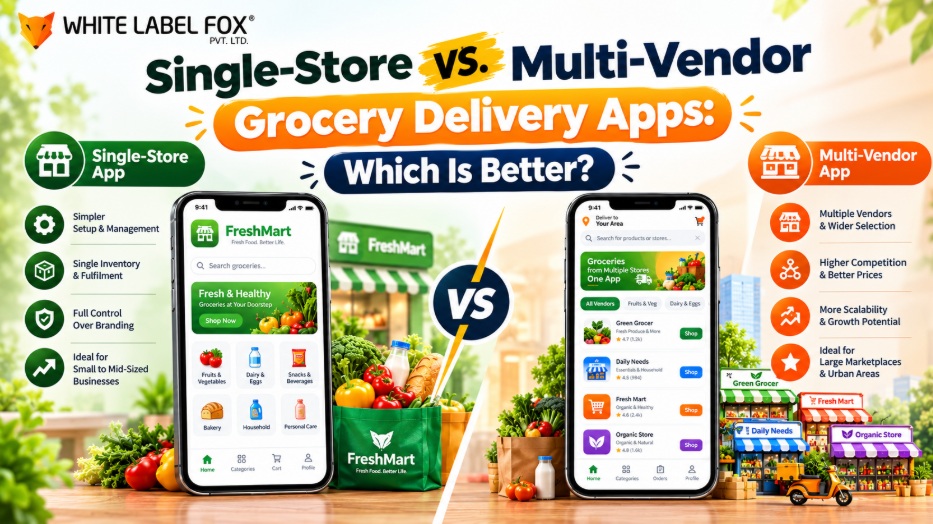
A single-store grocery delivery app allows customers to purchase products from one specific grocery store or retailer. The business manages its product inventory, order processing, and delivery operations.
This model is suitable for supermarket chains, local grocery retailers, independent store owners, and entrepreneurs who want to digitize their existing businesses.
Key Features of a Single-Store Grocery App
A successful grocery app should offer features that make shopping simple and convenient.
Product catalog: Display groceries, household essentials, beverages, and other products in organized categories.
Smart search: Help customers find products quickly using search and filtering options.
Shopping cart: Allow customers to review products and update quantities before placing orders.
Order tracking: Enable customers to monitor their orders and delivery progress.
Multiple payment options: Support suitable payment methods for the target market.
Delivery management: Help businesses organize deliveries and communicate order updates.
Customer notifications: Send order confirmations, delivery updates, and relevant offers.
Advantages of a Single-Store Model
A single-store platform gives business owners greater control over product availability, customer service, and delivery standards.
It is particularly useful for retailers who already have an established customer base and want to introduce online ordering without joining a larger marketplace.
Other benefits include easier brand positioning, direct customer relationships, and greater control over the shopping experience.
However, growth may depend on the store’s inventory, delivery coverage, and ability to serve customers in different locations.
What Is a Multi-Vendor Grocery Delivery App?
A multi-vendor grocery delivery app connects customers with multiple grocery stores through a single platform. Customers can explore participating stores, compare available products, and place orders according to the platform’s supported features.
This model is suitable for startups and entrepreneurs who want to establish an online grocery marketplace rather than operate a single retail store.
For example, businesses can study established models such as Instacart to understand how digital platforms connect customers with grocery retailers.
Key Features of a Multi-Vendor Grocery Delivery App
A multi-vendor platform requires features that support customers, store owners, delivery partners, and platform administrators.
Multiple store listings: Allow customers to discover different grocery stores in their area.
Vendor management: Enable store owners to manage their products, availability, and incoming orders.
Centralized administration: Help platform owners monitor vendors, customers, and platform activities.
Delivery partner management: Coordinate deliveries through suitable workflows.
Order management: Organize orders and provide updates throughout the delivery process.
Customer reviews and ratings: Help shoppers evaluate participating stores.
Promotions and offers: Support campaigns that attract customers and encourage repeat purchases.
Performance reports: Help administrators understand order activity, customer engagement, and vendor performance.
Advantages of a Multi-Vendor Model
A multi-vendor platform creates opportunities to serve a wider audience without relying on one grocery store.
Entrepreneurs can onboard local retailers, supermarkets, organic food stores, and specialty grocery providers. This approach can help businesses offer greater product variety and expand into additional service areas.
The model also creates opportunities to develop partnerships with local businesses and establish a recognizable marketplace brand.
However, managing multiple vendors requires clear operating policies, consistent service standards, and effective coordination between all participants.
Single-Store vs. Multi-Vendor Grocery Delivery Apps: Key Differences
Understanding the differences between these business models can help entrepreneurs select the right approach for their target market.
1. Business Ownership and Control
A single-store application is operated by one retailer, who controls the products, inventory, and customer experience.
In comparison, a multi-vendor platform brings several independent retailers together. The platform owner manages marketplace operations, while individual vendors generally control their own product listings and stock availability.
Best choice: A single-store model suits retailers seeking direct control, while a multi-vendor model suits entrepreneurs building a marketplace.
2. Product Variety
Single-store apps are limited to the products offered by one business. Although a retailer may provide an extensive catalog, its selection depends on its inventory and supply arrangements.
Multi-vendor platforms can offer a wider selection by partnering with different stores. This gives customers more choices and allows the platform to serve different shopping preferences.
Best choice: Multi-vendor platforms are generally better for businesses prioritizing product diversity.
3. Business Expansion
A single-store business can expand by opening additional locations, extending delivery coverage, or improving its existing operations.
A multi-vendor marketplace can grow by onboarding additional stores and entering new service areas. However, expansion still depends on vendor availability, customer demand, delivery capacity, and operational readiness.
Best choice: Multi-vendor platforms can offer a flexible expansion model for marketplace-focused startups.
4. Customer Experience
Single-store apps can deliver a consistent shopping experience because one business manages the customer journey.
Multi-vendor apps provide greater choice but must maintain service quality across different retailers. Product availability, packaging, and order preparation may vary between vendors.
Best choice: Both models can deliver a strong customer experience when supported by reliable operations and customer service.
5. Revenue Opportunities
Single-store businesses primarily generate revenue by selling their own products. They may also introduce delivery-related services or customer loyalty programs.
Multi-vendor platforms can explore several revenue streams, including vendor commissions, promotional listings, advertising opportunities, and subscription-based services where appropriate.
Best choice: Multi-vendor platforms may offer more revenue diversification, depending on market conditions and the business model.
How to Choose the Right Grocery Delivery App Model
The right model depends on your business objectives, target audience, and long-term growth plans.
Choose a Single-Store App If:
You own a grocery store or supermarket.
You want to accept online orders from existing customers.
You prefer managing your own products and delivery operations.
You want to strengthen your retail brand in a specific location.
You plan to expand gradually through your own stores.
Choose a Multi-Vendor App If:
You want to build an online grocery marketplace.
You plan to partner with multiple grocery retailers.
You want to serve different customer segments.
You aim to expand into additional locations.
You want to explore multiple revenue opportunities.
Before starting grocery delivery app development, research your competitors, customer expectations, local delivery challenges, and vendor availability. These insights can help you identify a suitable market position and avoid building features that your target audience does not need.
Why Business Strategy Matters in Grocery Delivery App Development
Technology alone does not guarantee success in the online grocery market. Businesses also need a clear understanding of their customers, competitors, and operational requirements.
Before launching your grocery delivery app, consider the following factors:
Target audience: Identify whether you want to serve households, working professionals, local communities, or business customers.
Market demand: Research shopping habits, delivery expectations, and existing competitors.
Vendor relationships: For multi-vendor platforms, establish clear agreements with participating retailers.
Delivery operations: Determine how orders will be prepared, assigned, and delivered.
Customer retention: Introduce loyalty programs, personalized offers, and convenient reordering options where appropriate.
Scalability: Choose an approach that can support your planned business expansion.
A Gojek Clone script may be relevant to entrepreneurs who eventually want to extend their operations beyond groceries into other on-demand services. However, businesses focused exclusively on grocery retail may benefit more from a specialized solution aligned with their immediate objectives.
Ultimately, successful grocery delivery app development requires a balance between customer convenience, operational efficiency, and a sustainable business model.
Conclusion
Choosing between a single-store and a multi-vendor grocery delivery app depends on your business vision, target customers, and expansion plans.
A single-store application is suitable for retailers who want to strengthen their existing business and maintain direct control over their operations. A multi-vendor platform is a strong option for entrepreneurs who want to connect multiple retailers with customers through a shared marketplace.
Both approaches can create valuable business opportunities when supported by appropriate market research, reliable delivery operations, and a customer-focused strategy.
If you are planning to enter the online grocery market, begin by identifying your business requirements and evaluating the solution that best fits your goals. Partnering with an experienced clone app development company can help you explore suitable business models, customization opportunities, and expansion strategies.
The right decision today can provide a stronger foundation for building a competitive grocery delivery business in the global digital marketplace.
Frequently Asked Questions (FAQs)
1. What is the difference between a single-store and a multi-vendor grocery delivery app?
A single-store grocery delivery app serves customers through one retailer, while a multi-vendor app connects customers with multiple grocery stores on a single platform. The choice depends on whether you want to operate a retail business or build a marketplace.
2. Which grocery delivery app model is better for startups?
A multi-vendor model can be suitable for startups that want to establish an online marketplace and partner with multiple retailers. However, a single-store model may be more appropriate for entrepreneurs who already operate a grocery store or want to focus on a specific location.
3. What features should a grocery delivery app include?
Essential features include product listings, search and filters, shopping carts, order tracking, payment options, customer notifications, and order management. Multi-vendor platforms should also support vendor management and centralized administration.
4. What is a grocery delivery app script?
A grocery delivery app script is a ready-made software solution that businesses can evaluate as a starting point for launching a grocery ordering and delivery service. Depending on its capabilities, it may support single-store or multi-vendor operations and allow customization to meet specific business requirements.
5. How can I start a grocery delivery business with a ready-made solution?
Start by researching your target market, choosing a single-store or multi-vendor business model, and defining your essential features. Next, evaluate suitable solutions, review their customization capabilities, and plan your vendor partnerships, delivery operations, and marketing strategy before launching.
About Author