From Zero To Niche Blog: Using AI Visuals To Attract Readers And Revenue
Starting a niche blog has never required a photography studio or a designer on payroll — but it does require visuals that stop the scroll. Banana AI on Kimg AI makes that possible for solo bloggers and small teams who want professional-quality images without the overhead. This guide walks through how to build a blog that earns, using AI-generated visuals from the ground up.
Why Visuals Are the First Impression
Most readers decide within seconds whether a blog post is worth their time. A wall of text rarely makes that cut. Here’s why visuals matter so much in niche blogging:
- A strong header image signals quality and sets the tone before a single word is read.
- Consistent visual style builds brand recognition — readers start to associate your aesthetic with your niche.
- Search engines reward time-on-page metrics, and relevant images keep readers engaged longer.
Niche blogs — whether covering urban gardening, budget travel gear, or home fitness — depend on trust. Visuals communicate that trust faster than text alone.
Choosing a Niche That Works With AI Visuals
Not every niche suits AI-generated imagery equally. Some are perfect fits.
- Evergreen lifestyle niches like minimalist living, wellness routines, or home décor rely on stylized, mood-driven imagery — exactly what AI generators produce naturally.
- Review and recommendation blogs need product mock-ups and contextual backgrounds rather than licensed photos. AI fills that gap cleanly.
- How-to and tutorial content benefits from custom illustrations that match the step-by-step flow of each post.
Avoid niches where audiences expect photojournalism or authenticated real-world shots — food photography from real kitchens, for instance, may still need a phone camera. For most other niches, AI visuals hold up well.
Also Read: Best AI Website Builders Review
Getting the Most from Banana AI Image Generator
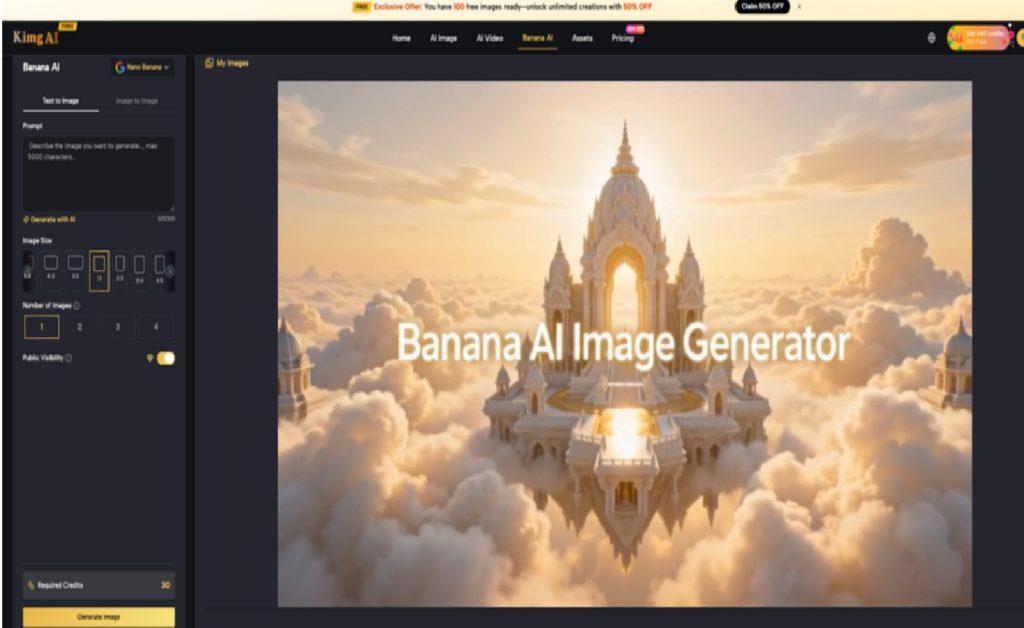
Kimg AI hosts the Banana AI model suite — including Nano Banana, Nano Banana 2, and Nano Banana Pro — each built for different output demands. Here’s how to use the Banana AI image generator efficiently as a blogger:
- Text-to-Image for original headers — Type a detailed prompt (up to 5,000 characters) to generate a completely original image. Specific descriptors about lighting, mood, and composition yield far better results than vague ones.
- Image-to-Image for consistent style — Upload a reference image that matches your blog’s aesthetic, then prompt the system to produce new visuals in the same style. This keeps your visual identity coherent across posts.
- Batch generation for speed — Generate up to four image variations per request. This is useful when A/B testing header images or creating a set of visuals for a single long-form post.
- Iterative refinement — If the first output misses the mark, use the redo functionality to enhance detail and structural fidelity without starting from scratch.
The interface requires no design background. Bloggers describe their vision in plain language and the model handles the technical execution.
Building a Visual Brand Across Your Blog
Consistency is what separates a forgettable blog from one that readers bookmark. The Banana AI image editor helps maintain that consistency with every new post.
- Style transfer across posts — By feeding a reference image into the image-to-image workflow, every new visual can share the same color palette, texture, or artistic style, even if the subject matter varies.
- Multi-image composition — The model can blend multiple visual concepts into one cohesive scene, useful for creating category banners or custom thumbnails that reference multiple topics at once.
- Reference-guided generation — Uploading up to 8 reference images lets bloggers steer outputs toward a specific look without manually editing every frame.
A travel gear blogger, for example, could establish a muted, cinematic tone with their first header image, then replicate that tone across dozens of posts using image-to-image prompts.
Content Types That Benefit Most
Not all blog content needs the same kind of image. Matching image type to content type is a practical skill worth developing.
- Listicles and roundups — Use the Banana AI Image Maker to produce one strong visual per list item. Each image reinforces the point and breaks up long sections of text.
- Opinion and editorial posts — Abstract or symbolic imagery works well here. The Banana AI image generator can produce conceptual visuals that match a thematic argument rather than a literal subject.
- Product comparisons — Background-swapped product images (generated via image-to-image) give comparison posts a polished, editorial look without needing to license stock photos.
- Seasonal and trend-based content — AI generation is fast enough to support timely posts. New visuals matching current events or seasonal topics can be ready in minutes.
SEO Considerations for AI Images
Search engines can’t see images — they read the metadata around them. A few practices make AI-generated visuals work harder for SEO:
- File names matter — Rename generated images descriptively before uploading (e.g., minimalist-home-office-setup.jpg rather than image-0042.jpg).
- Alt text is required — Write alt text that accurately describes the image and includes relevant keywords naturally. Screen readers and crawlers both rely on it.
- Image size affects speed — Export at the highest quality your post needs (up to 4K is available through Kimg AI), then compress before uploading to keep page load times fast.
- Original images outperform stock — Search engines have no record of AI-generated images, which means they carry no duplicate content penalty the way recycled stock photos sometimes do.
Monetizing the Blog Once Visuals Are Handled
Once the visual production process is streamlined, the focus can shift to monetization. A few approaches work particularly well for visually-driven niche blogs:
- Affiliate marketing — High-quality product visuals built with the Banana AI image editor make affiliate posts more persuasive. Readers are more likely to click through when the images feel polished and intentional.
- Display advertising — Ad networks like Mediavine or AdThrive favor blogs with low bounce rates. Strong visuals contribute directly to keeping readers on the page.
- Digital product sales — Niche blogs that sell printables, templates, or guides can use AI-generated preview images to make products look more appealing in shop listings.
- Sponsored content — Brands are more likely to approach blogs with a coherent aesthetic. Consistent AI-generated visuals signal professionalism, even to first-time visitors.
Conclusion
Building a niche blog with only AI-generated visuals is not a shortcut — it’s a smarter workflow. When the visual layer is handled efficiently through a tool like Kimg AI, more time and attention can go toward writing, SEO, and building an audience. The combination of text-to-image generation, image-to-image editing, and iterative refinement available through the Banana AI model suite gives independent bloggers access to capabilities that once required entire creative teams.
About Author